

Anúncios
When choosing between two of the largest car insurance companies, it’s natural to wonder which one offers better savings. Both providers have a strong national presence and rank among the top in the U.S. market. Progressive holds the #2 spot, while Geico follows closely at #3.
Geico recently earned the 2025 Bankrate Award for Best Auto Insurance for High-Risk Drivers, showcasing its commitment to diverse customer needs. To ensure accuracy, this comparison uses data from Quadrant Information Services and insights from J.D. Power studies. Additional authority comes from trusted sources like NAIC, AM Best, and CRASH Network.
Anúncios
Whether you’re looking for affordability or reliability, understanding the differences between these auto insurance giants can help you make an informed decision. Let’s dive into the details to see which provider might save you more.
Key Takeaways
- Progressive and Geico are among the top three insurance providers in the U.S.
- Geico won the 2025 Bankrate Award for Best Auto Insurance for High-Risk Drivers.
- Data sources include Quadrant Information Services and J.D. Power studies.
- Trusted industry sources like NAIC and AM Best support the analysis.
- This comparison focuses on savings and customer benefits.
Introduction to Progressive and Geico
Two of the most recognized names in the industry are Progressive and Geico. Both have established themselves as leaders in the market, offering a wide range of coverage options tailored to meet the needs of diverse drivers. Whether you’re looking for affordability or advanced tools, these providers have something to offer.
Overview of Progressive
Founded in 1937, Progressive operates in all 50 states and holds an A+ rating from AM Best. It insures over 28 million vehicles, making it one of the largest insurance companies in the U.S. One standout feature is its “Name Your Price” tool, which allows you to customize your policy based on your budget.
Progressive also leads in telematics with its Snapshot program. This tool tracks your driving habits and can help you save on premiums. For high-risk drivers, Progressive offers specialized coverage, making it a strong choice for those with unique needs.
Overview of Geico
Geico, founded in 1936, is a subsidiary of Berkshire Hathaway and boasts an A++ AM Best rating. With over 18 million policyholders, it’s known for its competitive rates and strong customer service. Geico offers exclusive discounts for military personnel and federal employees, making it a popular choice among these groups.
In 2024, Geico ranked #1 in J.D. Power’s Digital Experience Study, highlighting its user-friendly online tools. While it partners with third-party providers for home insurance, its auto policies are handled in-house, ensuring streamlined service.
| Feature | Progressive | Geico |
|---|---|---|
| Founded | 1937 | 1936 |
| AM Best Rating | A+ | A++ |
| Policyholders | 28M+ | 18M+ |
| Unique Tool | Name Your Price | Military Discounts |
| Telematics | Snapshot | DriveEasy |
Progressive vs Geico: Key Differences
Understanding the distinctions between these two industry leaders can help you make a smarter choice. Both have a long history and strong market presence, but their approaches and strengths vary significantly.
Company Backgrounds
Progressive, founded in 1937, has an 86-year legacy of innovation. It operates through independent agents and direct sales, offering flexibility in how you purchase your policy. With $55 billion in assets, it’s financially robust and holds a 15.24% market share.
Geico, established in 1936, is slightly older and operates exclusively direct-to-consumer. Its financial stability is backed by $42 billion in assets and a 12.31% market share. Both companies have stood the test of time, but their business models cater to different preferences.
Market Presence
Progressive leads in states like California, while Geico dominates in Texas and Florida. This regional strength can influence which provider is more accessible or tailored to your location.
Geico’s “15-minute savings” promise appeals to those seeking quick quotes, while Progressive’s “Name Your Price” tool focuses on customization. Additionally, Progressive offers rideshare coverage, a feature not commonly found with Geico.
When comparing their financial metrics, Progressive’s larger asset base suggests slightly greater stability. However, both companies are reliable choices with strong reputations in the industry.
Progressive vs Geico: Cost Comparison
Cost is often a deciding factor when selecting an auto policy. Both providers offer competitive rates, but your final price depends on various factors like your driving history, location, and credit score.
Average Rates for Different Driver Profiles
Your driving profile significantly impacts your premiums. For example, drivers with clean records pay less than those with DUIs or accidents. Here’s a quick comparison of average annual rates:
| Driver Profile | Progressive | Geico |
|---|---|---|
| Clean Record | $1,960 | $1,731 |
| DUI | $2,770 | $4,246 |
| Teen Driver | $3,500 | $3,200 |
| Senior Driver | $1,901 | $2,065 |
Factors Influencing Premiums
Several elements affect your price. Credit scores play a role, with Geico’s premiums increasing 28% more than Progressive’s for lower scores. Location also matters—urban areas often have higher rates due to increased risk.
Progressive’s “Price Match” guarantee ensures you get the best deal when switching. Geico offers a 22% discount for good drivers, while Progressive provides up to 34% savings for accident-free policyholders.
Understanding these factors can help you choose the right car insurance for your needs. Use this data to compare and find the most affordable option.
Progressive vs Geico: Coverage Options
Choosing the right coverage can make a big difference in your protection on the road. Both providers offer a variety of options to meet your needs, but there are some key distinctions worth noting.
Standard Coverage
Both companies provide essential coverage like liability, collision, and comprehensive insurance. These options meet minimum liability requirements in most states. However, the way they handle claims and customer satisfaction can vary.
For example, Progressive’s Name Your Price tool allows you to customize your policy based on your budget. Geico, on the other hand, is known for its straightforward pricing and quick quotes.
Additional Coverage Options
When it comes to extra protection, the two providers differ significantly. Progressive offers gap insurance, which covers the difference between your car’s value and what you owe on it. Geico does not provide this option.
Here are some other notable differences:
- Progressive includes custom parts coverage up to $5,000, ideal for car enthusiasts.
- Geico offers mechanical breakdown insurance (MBI), which can be a lifesaver for older vehicles.
- Both provide accident forgiveness, but Progressive distinguishes between large and small accidents.
- Roadside assistance packages differ—Progressive includes trip interruption, while Geico focuses on basic towing and lockout services.
- Rental reimbursement limits vary: $50/day with Progressive and $60/day with Geico.
Understanding these options can help you choose the right products for your needs. Whether you prioritize customization or convenience, both providers have something to offer.
Progressive vs Geico: Discounts
Saving money on your policy is easier when you know which discounts are available. Both providers offer a variety of ways to reduce your premiums, but some options are unique to each company. Understanding these can help you maximize your savings.
Common Discounts
Both companies provide several shared discounts that can lower your costs. These include:
- Multi-policy savings for bundling home and auto insurance.
- Good student discounts for young drivers with strong academic performance.
- Safe driver rewards for maintaining a clean driving record.
- Anti-theft device reductions for vehicles equipped with security systems.
- Paid-in-full discounts for paying your annual premium upfront.
- Defensive driving course savings for completing approved programs.
- Vehicle safety feature reductions for cars with advanced safety tech.
- Loyalty rewards for long-term policyholders.
Unique Discounts
Each provider also offers exclusive discounts tailored to specific groups. For example, Geico offers up to 15% off for active or retired military personnel. They also provide a 25% emergency deployment discount for service members on active duty.
On the other hand, Progressive offers a 7% average savings for getting an online quote. They also have a distant student discount, which applies if your child is attending school more than 100 miles away without a vehicle.
When it comes to multi-car savings, Geico leads with a 25% average reduction, while Progressive offers a 12% discount. Additionally, Geico’s seat belt use discount can lower your PIP premiums, making it a smart choice for safety-conscious drivers.
By exploring these options, you can find the best discounts to fit your needs and budget. Whether you’re a student, military member, or just looking to save, both providers have something to offer.
Progressive vs Geico: Telematics Programs
Telematics programs are transforming how drivers manage their insurance policies. These tools use technology to track your habits and offer personalized rates. Both providers have unique offerings that cater to different needs.
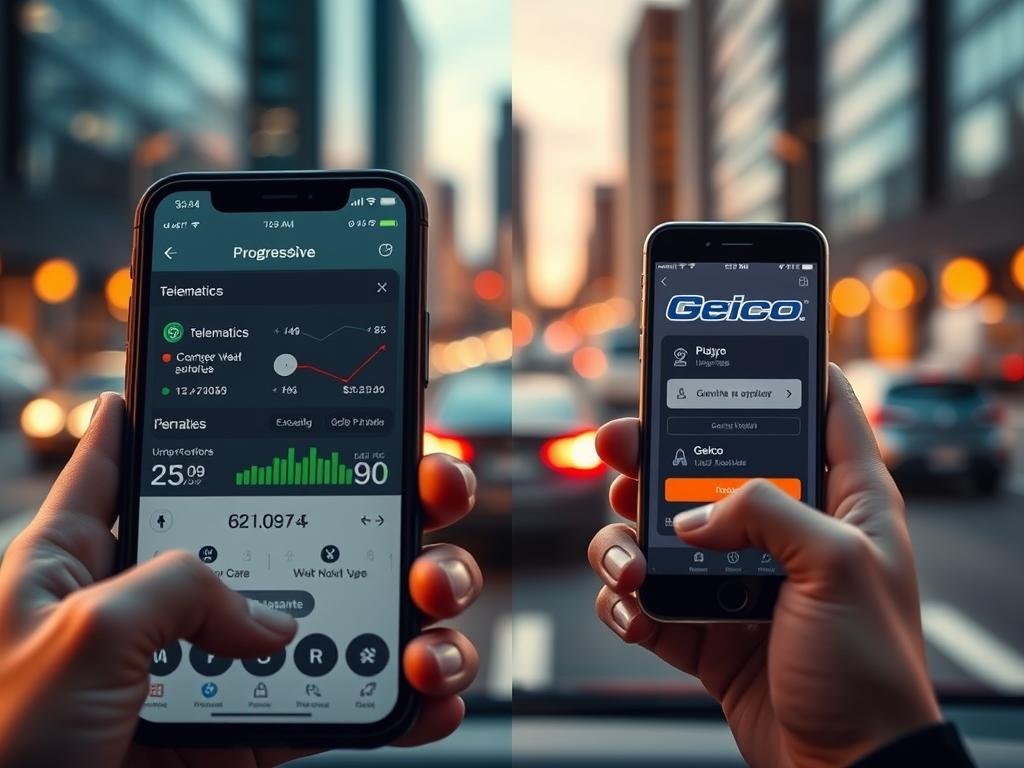
These programs not only help you save money but also encourage safer driving. Let’s explore the features and benefits of each option to see which one might work best for you.
Geico’s DriveEasy
Geico’s DriveEasy is an app-based program available in 37 states. It tracks 11 driving metrics, including speed, braking, and phone usage. This data is used to assess your driving habits and adjust your premiums accordingly.
However, 23% of users report rate increases due to poor scores. On the positive side, DriveEasy scored 837 in J.D. Power’s Digital Experience Study, reflecting its user-friendly design.
“DriveEasy’s scoring system is straightforward, but it can be strict. I saved money initially, but a few late-night drives increased my rates.” – Real User
Progressive’s Snapshot
Progressive’s Snapshot offers both app-based and plug-in device tracking. Users save an average of $231 at renewal by demonstrating safe driving habits. The program also includes “TripSignals,” a feedback feature that provides tips for improvement.
Snapshot scored 816 in J.D. Power’s study, slightly lower than DriveEasy. However, its flexibility and focus on positive reinforcement make it a popular choice.
| Feature | DriveEasy | Snapshot |
|---|---|---|
| Availability | 37 states | Nationwide |
| Tracking Method | App-based | App or plug-in |
| Average Savings | Varies | $231 |
| J.D. Power Score | 837 | 816 |
Both programs offer unique benefits, but your choice depends on your driving habits and preferences. Whether you prefer app-based tracking or a plug-in device, these tools can help you save while promoting safer driving.
Progressive vs Geico: Customer Experience
Evaluating customer service and claims handling can help you decide which provider fits your needs. Both companies offer robust digital tools and efficient processes, but their approaches differ. Let’s explore how they perform in these areas.
Online and Mobile Tools
Both providers have mobile apps with high ratings—4.8 on the App Store and 4.6 on Google Play. Progressive’s app includes a virtual assistant that helps with policy management and claims filing. Geico’s app features a “Digital Garage,” which tracks vehicle maintenance and sends reminders.
Geico’s tools are known for their simplicity, while Progressive focuses on customization. For example, Progressive’s app allows you to adjust coverage levels directly, while Geico emphasizes quick access to essential features.
Claims Handling
When it comes to claims, Geico ranks slightly higher in J.D. Power’s satisfaction study (16th vs. Progressive’s 20th). Geico processes claims faster, with an average payout time of 5.2 days compared to Progressive’s 6.1 days.
Progressive, however, has a higher photo claims approval rate at 89%. This means you can often resolve minor claims by simply uploading photos. Both companies have extensive body shop networks—Progressive with 12,000+ locations and Geico with 10,000+.
| Feature | Progressive | Geico |
|---|---|---|
| Claims Satisfaction Rank | 20th | 16th |
| Average Payout Time | 6.1 days | 5.2 days |
| Photo Claims Approval Rate | 89% | N/A |
| Body Shop Network Size | 12,000+ | 10,000+ |
Your choice may depend on whether you prioritize speed or convenience. Both providers deliver a solid experience, but their strengths cater to different preferences.
Progressive vs Geico: Customer Complaints
Understanding how companies handle complaints can reveal their commitment to customer satisfaction. The NAIC Complaint Index is a useful tool for comparing how insurers perform in this area. A score of 1.0 represents the average, with lower scores indicating fewer complaints.
In 2023, Geico scored 0.55, while Progressive scored 0.89. This means Geico received fewer complaints than the industry average, while Progressive’s score was slightly higher. Both companies have made efforts to improve, with Geico reducing complaints by 23% since 2022.
NAIC Complaint Index
The NAIC Complaint Index measures the number of complaints relative to a company’s market share. It’s a reliable way to compare performance across the industry. Geico’s lower score reflects its focus on resolving customer issues efficiently.
Common Complaints
Both providers share some common complaints. The top issue for both is rate increases after filing a claim. Other frequent concerns include:
- Delays in claims processing.
- Poor communication during the claims process.
- Difficulty reaching customer service representatives.
- Unexpected policy changes.
- Billing errors or discrepancies.
Despite these issues, both companies maintain A+ ratings from the Better Business Bureau. However, customer review scores are lower, indicating room for improvement.
“I was frustrated when my rates went up after a minor claim. It felt unfair, especially since I’ve been a loyal customer for years.” – Anonymous User
By understanding these complaints, you can better evaluate which provider aligns with your expectations. Both have strengths and weaknesses, but their commitment to improvement is evident.
Progressive vs Geico: Financial Strength
Financial strength is a critical factor when evaluating insurance providers. A company’s ability to meet claims and maintain stability directly impacts your experience. Both providers have strong financials, but their metrics and strategies differ.
AM Best Ratings
AM Best ratings are a trusted measure of an insurer’s financial health. Geico holds an A++ rating, the highest possible, while Progressive has an A+ rating. These ratings reflect their ability to meet policyholder obligations.
An A++ rating indicates exceptional financial stability, while an A+ is still excellent. Both companies have maintained these ratings for years, showcasing their resilience in the industry.
Financial Stability
Progressive reported a net income of $4.3 billion in 2024, slightly higher than Geico’s $3.8 billion. This reflects Progressive’s strong revenue streams and efficient operations.
Liquidity ratios also play a role in financial stability. Progressive’s ratio of 1.5 is higher than Geico’s 1.3, indicating better short-term financial health. Both companies use reinsurance strategies to manage catastrophic risks, ensuring they can handle large claims.
Geico’s $2.5 billion capital surplus provides an additional safety net. This surplus helps the company navigate unexpected challenges and maintain steady growth.
| Metric | Progressive | Geico |
|---|---|---|
| AM Best Rating | A+ | A++ |
| Net Income (2024) | $4.3B | $3.8B |
| Liquidity Ratio | 1.5 | 1.3 |
| Capital Surplus | N/A | $2.5B |
Both providers have a history of paying dividends and delivering shareholder returns. Progressive’s consistent performance and Geico’s capital surplus make them reliable choices in the industry.
Progressive vs Geico: High-Risk Drivers
Navigating insurance options as a high-risk driver can feel overwhelming. Whether you have a DUI, speeding tickets, or other violations, finding the right coverage is essential. Both providers offer solutions, but their approaches and costs differ significantly.
Coverage for High-Risk Drivers
Progressive’s High Risk Division specializes in non-standard insurance, catering to drivers with challenging records. They offer flexible options like SR-22 filings for $25, which is $10 cheaper than Geico’s $35 fee. Progressive also provides FR-44 coverage, required in states like Florida and Virginia for serious violations.
Geico, on the other hand, uses its Motor Vehicle Report (MVR) recheck policy. This allows them to reassess your driving history periodically, potentially lowering your premiums over time. However, their approval rate for high-risk drivers is 76%, compared to Progressive’s 89%.
Rates for High-Risk Drivers
When it comes to costs, Progressive is often more affordable. For example, their rate for drivers with a DUI is 33% lower than Geico’s. This makes them a strong choice for those looking to save while rebuilding their driving history.
“Progressive’s High Risk Division gave me a second chance after my DUI. Their rates were fair, and the process was straightforward.” – Anonymous User
Both providers have unique strengths, but your choice depends on your specific needs. Whether you prioritize affordability or long-term flexibility, understanding these options can help you make an informed decision.
Progressive vs Geico: Young Drivers
Young drivers often face higher premiums due to their limited experience on the road. Both providers offer solutions to help families manage these costs. Understanding the options available can make a big difference in finding affordable coverage.
Rates for Young Drivers
For a 25-year-old, Geico’s average annual rate is $2,172, while Progressive charges $2,723. These rates reflect the higher risk associated with younger drivers. However, both companies offer tools to help reduce costs.
Progressive’s Teen Driver Contract is a unique feature. It allows parents to set rules and monitor their teen’s driving habits. This can lead to safer driving and potential discounts over time.
Geico partners with graduated licensing programs in many states. These programs help young drivers gain experience gradually, which can lower their premiums. Both providers also offer monitoring apps to track driving behavior and reward safe habits.
Discounts for Young Drivers
Geico offers up to 15% off for teens who complete driver’s education courses. Their Good Student discount requires a GPA of 3.0 or higher, making it a great option for academically focused drivers.
Progressive’s Teen Driver Discount is available for families with young drivers on their policy. They also provide a Distant Student Discount if the young driver is attending school more than 100 miles away without a vehicle.
Here’s a quick comparison of discounts for young drivers:
| Discount | Progressive | Geico |
|---|---|---|
| Driver’s Ed | N/A | Up to 15% |
| Good Student | N/A | Yes |
| Teen Driver | Yes | N/A |
| Monitoring App | Yes | Yes |
By exploring these options, young drivers and their families can find the best insurance solutions. Whether it’s through discounts or monitoring tools, both providers offer ways to save.
Progressive vs Geico: Senior Drivers
Senior drivers have unique needs when it comes to auto coverage. Both providers offer solutions designed to make insurance more affordable and accessible. For example, mature driver courses can earn you a 5-10% discount, helping reduce your premiums.
Low-mileage thresholds vary between providers, so it’s worth comparing which one fits your driving habits better. Vision test requirements for renewals are another factor to consider, especially for older drivers.
Accident forgiveness policies differ slightly. Some plans may exclude senior drivers, so review the details carefully. Progressive’s “Retiree Discount” is a standout option, offering savings for those no longer commuting daily.
Medical payment coverage maximums also vary. This can be crucial for seniors who may need higher limits. By exploring these options, you can find the right plan to meet your needs and budget.
